Sep 27, 2026
CoPILOT Retreat 2025
Nov 28, 2025
Image
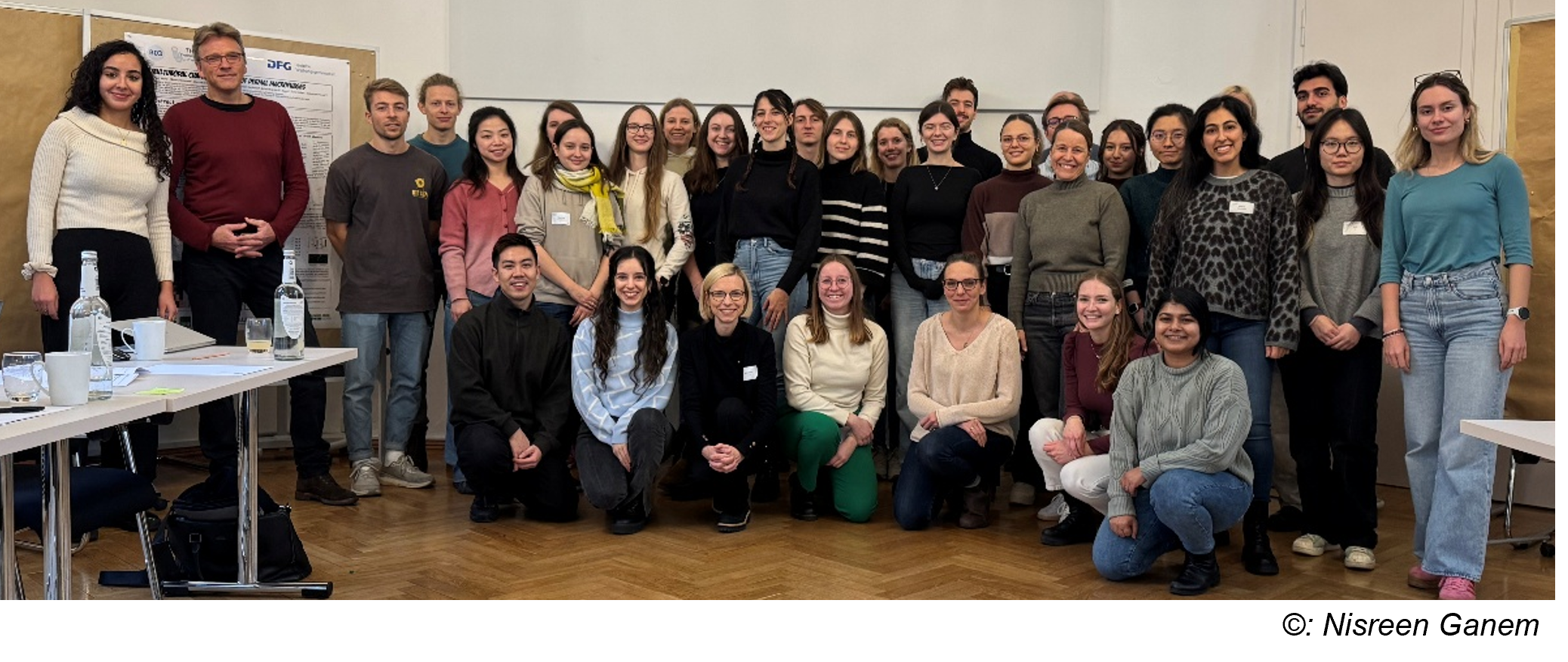
From 26 to 28 November 2025, almost all CoPILOT members came together for the third CoPILOT Annual Retreat at the Dietrich-Bonhoeffer-Haus in Berlin.
This three-day event brought together PILOT Doctoral researchers from all PILOT sites, CoPILOT Board members and invited guest speakers from the PILOT consortium. The program was complemented with two external guest speakers, Martha Merrow (LMU, Munich) and Eike Latz (Charité, Berlin).
On Wednesday, the retreat began with a joint welcome address by the CoPILOT leaders, Katrin Kierdorf and Markus Sperandio, who gave an overview on the Retreat program, the CoPILOT Curriculum and important dates and events in 2026. The following scientific speed-dating session enabled participants to get to know each other and each other’s work better and served as an effective warm-up for the subsequent scientific program.
The first scientific session started with a lecture by Nikita Raj, postdoctoral researcher in the PILOT project B02. She presented her recent finding on Listeria monocytogenes infection at the maternal–fetal interface, highlighting the host–pathogen interactions during pregnancy.
The following poster sessions showcased a broad spectrum of ongoing projects across the consortium, covering topics from basic immunological mechanisms to translational work. The contributions were presented by doctoral researchers who started their doctoral projects within the last year. In the afternoon, Paula Rothämel, Clinician Scientist in the PILOT project B06, gave an engaging talk on the genetic regulation of immune cell development in human neonates. The day concluded with an insightful keynote lecture by Martha Merrow a recognized expert in the field of chronobiology from the Institute of Medical Psychology, LMU Munich. In her talk, she provided a comprehensive overview of the organization of circadian rhythms, ranging from microbial systems to human physiology, which stimulated numerous questions and in-depth discussions among the participants. An informal social evening with a pub quiz encouraged further networking among participants.
On Thursday, the program started by an interactive workshop on storytelling and project pitching, led by Kathrin Mengis and Nina Spiri from Young Entrepreneurs in Science. This workshop introduced key elements of science communication and enabled participants to translate their own research projects into compelling and memorable storylines. Through practical exercises, pitch development, and expert feedback, early career researchers strengthened their ability to communicate scientific ideas effectively to both scientific and non-scientific audiences. During an impressive lunch keynote lecture, all participants learned from Eike Latz (Charité, Berlin) about the roles of inflammasomes in health and disease, and he additionally provided forward-looking perspectives on the potential future of diagnostics and preventive strategies, particularly in the field of immunology.
In the afternoon, doctoral researchers in their second year or beyond presented their work in the afternoon’s creative poster session, which featured alternative presentation formats designed to foster lively discussions and innovative ways of communicating research findings.
The scientific program was complemented by a guided city walk through Berlin’s ‘hidden backyards’, offering cultural context and informal networking opportunities, before a joint dinner concluded the day.
The final day featured additional creative poster sessions with lively discussions at the posters and insightful talk by Jovana Cupovic (Institute of Neuropathology, University Medical Centre Freiburg) who gave insights into her research topic on the macrophage–fibroblast interactome, especially in the developing dermis.
After this session all attendees were invited to vote for their favourite poster presentations in both poster presentation categories: Congratulations to Jonas Pes (A01), Alina Nelipovich (A02) and Anna-Lena Ullrich (A01) for the best creative poster presentations and congratulations to Lara Kötter (A04) and Mert Meydanci (B05) for the best classical poster presentations.
The retreat concluded with a brief feedback and discussion session and the CoPILOT board members provided a outlook on the upcoming year, highlighting the PILOT application work for the second funding period. Participants were also invited to share suggestions for future workshops and contributing valuable ideas for the continued development of the initiative.
Overall, the CoPILOT retreat 2025 provided an excellent platform for scientific exchange, interdisciplinary learning, and networking. High-quality presentations, interactive workshops, and social activities effectively supported the training and integration of early-career researchers, reinforcing the collaborative spirit of the PILOT consortium. This retreat further demonstrated the value of personal interactions and collaborations, underlining the graduate program’s role in preparing the next generation of experts, particularly in perinatal immune development.
Thanks to all organizers of this retreat – especially to the doctoral representatives Marleen Eckert (A02), Alina Nelipovich (A02) and Jonas Pes (A01) who contributed greatly to the success of the CoPILOT retreat 2025!
Image
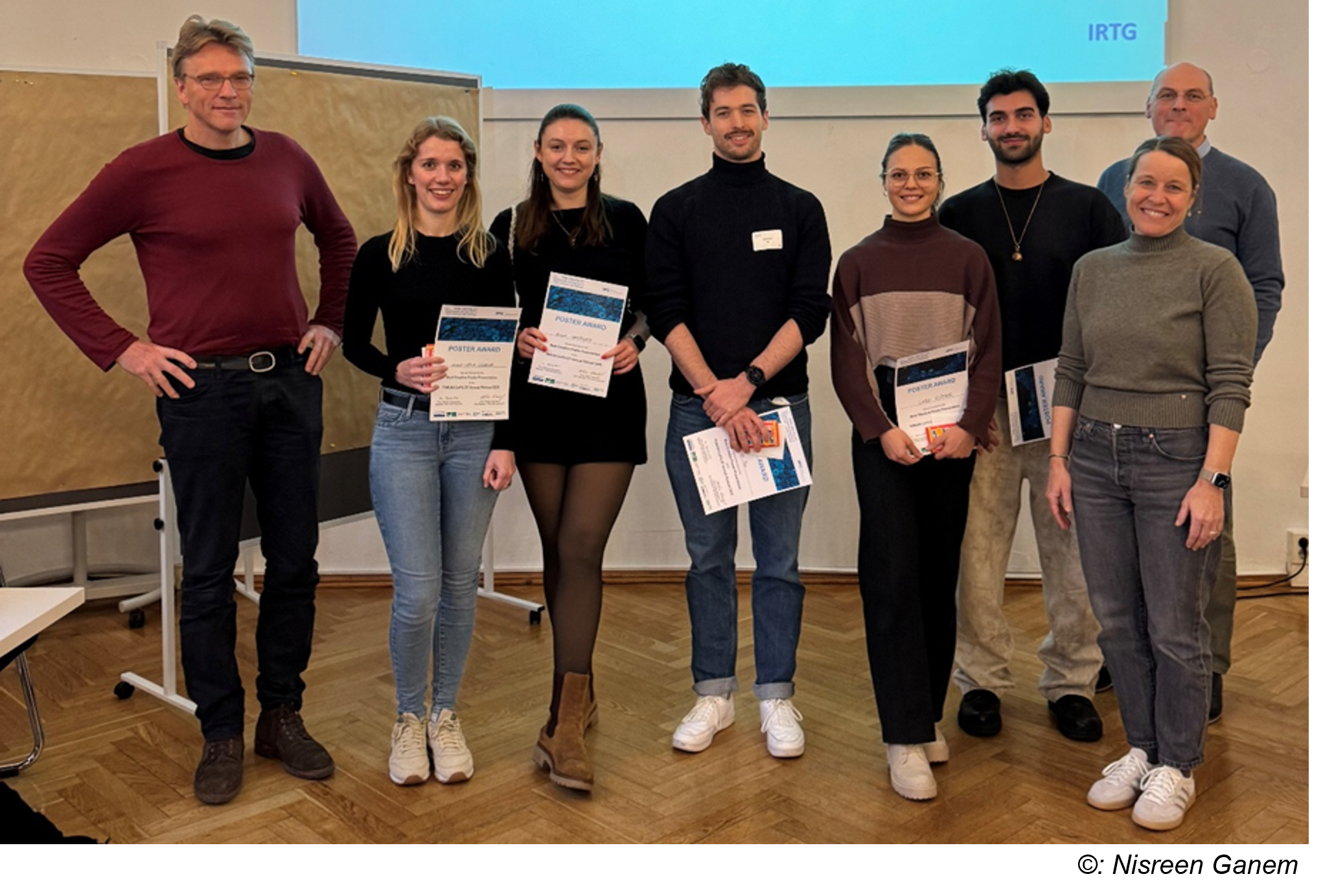
Poster presentation winners: from left to right: Philipp Henneke (Scientific Director, PILOT), Anna-Lena Ullrich (A01), Alina Nelipovich (A02), Jonas Pes (A01), Lara Kötter (A04), Mert Meydanci (B05), Verena Kochan (Coordinator, CoPILOT), Markus Sperandio (Co-Leader, CoPILOT)